

In-Vitro Mammalian Chromosomal Aberration Test (ISO 10993-3 & ISO 10993-33) – Using Human Peripheral Blood Lymphocytes
Ribosome Research Centre provides In-Vitro Mammalian Chromosomal Aberration Test as per ISO 10993-3 & ISO 10993-33 using Human Peripheral Blood Lymphocytes. This sensitive mammalian cell-based assay detects chromosome damage, identifies genetic risks early, and meets global regulatory requirements for medical devices, implantable devices, and raw materials.
Ribosome Research Centre Pvt. Ltd.
Share on LinkedIn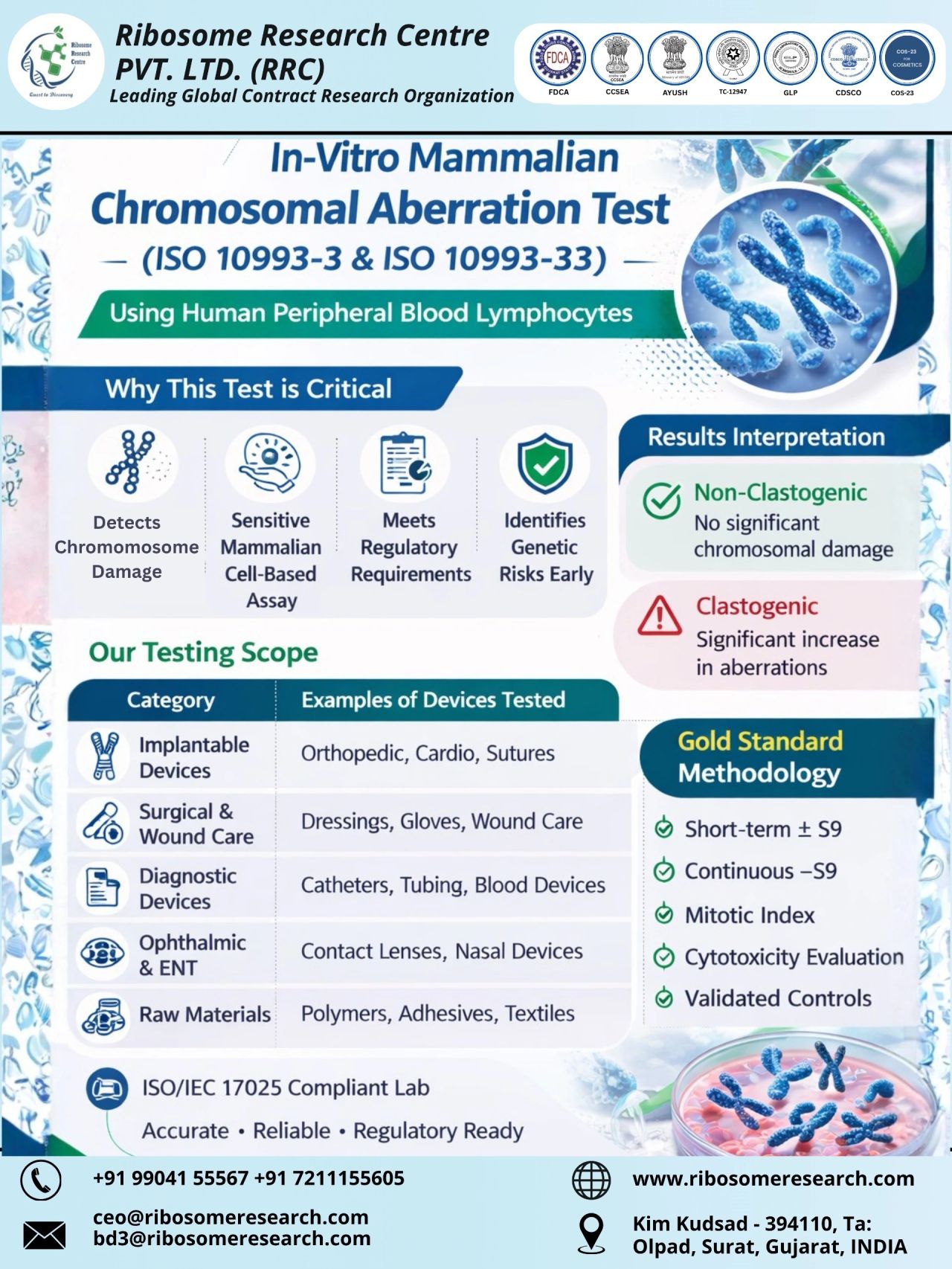
Genetic safety is a critical requirement for medical devices that come in contact with the human body. The In-Vitro Mammalian Chromosomal Aberration Test is a key genotoxicity test that evaluates whether a medical device, material, or extract can cause damage to chromosomes.
At Ribosome Research Centre Pvt. Ltd. (RRC), a Leading Global Contract Research Organization, we perform this test as per ISO 10993-3 & ISO 10993-33 using Human Peripheral Blood Lymphocytes in our ISO/IEC 17025 Compliant Lab.
Accurate • Reliable • Regulatory Ready
Why This Test is Critical
Detects Chromosome Damage
Sensitive Mammalian Cell-Based Assay
Meets Regulatory Requirements
Identifies Genetic Risks Early
This test helps manufacturers identify clastogenic potential before the product reaches clinical use, reducing regulatory risk and ensuring patient safety.
Our Testing Scope
Our chromosomal aberration testing supports a wide range of medical devices and materials:
1. Implantable Devices
Examples: Orthopedic, Cardio, Sutures
2. Surgical & Wound Care
Examples: Dressings, Gloves, Wound Care
3. Diagnostic Devices
Examples: Catheters, Tubing, Blood Devices
4. Ophthalmic & ENT
Examples: Contact Lenses, Nasal Devices
5. Raw Materials
Examples: Polymers, Adhesives, Textiles
Gold Standard Methodology
At Ribosome Research Centre, we follow a validated, gold-standard methodology:
Short-term ± S9
Continuous –S9
Mitotic Index
Cytotoxicity Evaluation
Validated Controls
This approach ensures scientific accuracy, reproducibility, and regulatory acceptance.
Results Interpretation
Non-Clastogenic:
No significant chromosomal damage. The test article does not show a significant increase in aberrations.
Clastogenic:
Significant increase in aberrations. The test article shows potential to cause chromosomal damage.
Our detailed report provides clear interpretation, raw data review, and regulatory-ready documentation to support your submission.
Why Choose Ribosome Research Centre?
ISO/IEC 17025 Compliant Lab
Experienced Genotoxicity & Biocompatibility Experts
Compliance with ISO 10993-3 & ISO 10993-33
Validated Controls and Gold Standard Methodology
Comprehensive Technical Documentation
Timely Project Execution
Audit and Inspection Support
We focus on delivering reliable, scientifically supported testing solutions that strengthen your biocompatibility program and help maintain product safety and regulatory compliance.
Contact Ribosome Research Centre
Looking for reliable In-Vitro Mammalian Chromosomal Aberration Test services?
Connect with Ribosome Research Centre to strengthen your biocompatibility and genotoxicity testing program.
Contact Numbers: +91 99041 55567 | +91 72111 55605
Email: ceo@ribosomeresearch.com | bd3@ribosomeresearch.com
Ribosome Research Centre Pvt. Ltd. (RRC) - Leading Global Contract Research Organization

 Stay connected with science