

Implantation Study (ISO 10993-6:2016) – Evaluating Local Tissue Reaction of Medical Implants
Ribosome Research Centre provides Implantation Study as per ISO 10993-6:2016 to evaluate possible local tissue reaction when a test item is implanted for a specific period of time. Our study covers implantation in subcutaneous tissue, muscle, bone, and brain tissue for dental implants, orthopedic implants, cardiac devices, coronary stents, and specialized medical implants.
Ribosome Research Centre Pvt. Ltd.
Share on LinkedIn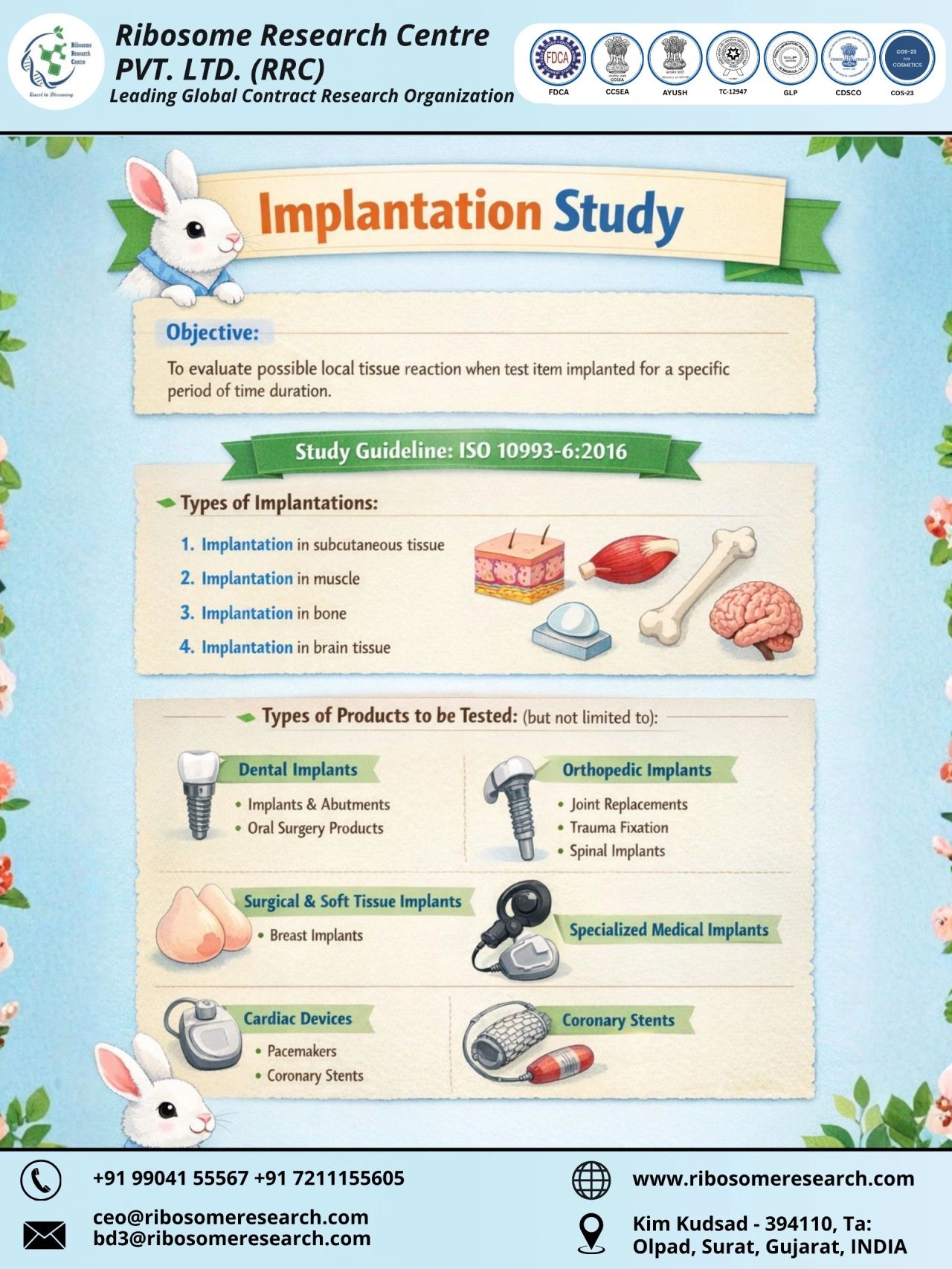
When a medical device or implant is placed inside the human body, its safety depends not only on its function but also on how the surrounding tissue reacts to it. An Implantation Study is a critical biocompatibility test that evaluates the local tissue response after implantation.
At Ribosome Research Centre Pvt. Ltd. (RRC), a Leading Global Contract Research Organization, we conduct Implantation Studies as per ISO 10993-6:2016 to help manufacturers demonstrate the safety, biocompatibility, and regulatory compliance of their implantable products.
Objective
To evaluate possible local tissue reaction when test item is implanted for a specific period of time duration.
This study helps identify inflammation, fibrosis, necrosis, and other local tissue changes caused by the implant material, ensuring the product is safe for long-term implantation.
Study Guideline: ISO 10993-6:2016
Our implantation studies are performed in compliance with:
ISO 10993-6:2016 – Biological evaluation of medical devices – Part 6: Tests for local effects after implantation
This globally accepted guideline ensures your study data is accepted by regulatory authorities including CDSCO, USFDA, and EU Notified Bodies.
Types of Implantations
We perform implantation in different anatomical sites based on the intended use of the device:
1. Implantation in Subcutaneous Tissue
For devices and materials intended for subcutaneous placement.
2. Implantation in Muscle
For evaluating muscle tissue reaction, commonly used for orthopedic and general implant materials.
3. Implantation in Bone
For dental, orthopedic, and spinal implants where bone integration is critical.
4. Implantation in Brain Tissue
For specialized neurological implants and devices in contact with brain tissue.
Types of Products to be Tested (but not limited to):
Dental Implants
Implants & Abutments
Oral Surgery Products
Orthopedic Implants
Joint Replacements
Trauma Fixation
Spinal Implants
Surgical & Soft Tissue Implants
Breast Implants
Specialized Medical Implants
Customized and advanced implantable devices
Cardiac Devices
Pacemakers
Coronary Stents
Coronary Stents
Drug-eluting and bare-metal stents for vascular applications
Why Implantation Study is Critical?
Evaluates local tissue compatibility and safety
Detects inflammation, fibrosis, and adverse tissue reaction
Supports ISO 10993 biocompatibility assessment
Meets global regulatory requirements
Reduces risk of implant failure and regulatory rejection
Why Choose Ribosome Research Centre?
ISO/IEC 17025 Compliant Lab
Experienced Preclinical & Biocompatibility Experts
Compliance with ISO 10993-6:2016
Ethical Animal Study Practices (CCSEA Approved)
Comprehensive Histopathology Evaluation
Complete Technical Documentation
Timely Project Execution
Audit and Inspection Support
We focus on delivering reliable, scientifically supported implantation study solutions that strengthen your biocompatibility program and help maintain product safety and patient trust.
Contact Ribosome Research Centre
Looking for reliable Implantation Study services as per ISO 10993-6:2016?
Connect with Ribosome Research Centre to strengthen your biocompatibility testing program.
Contact Numbers: +91 99041 55567 | +91 72111 55605
Email: ceo@ribosomeresearch.com | bd3@ribosomeresearch.com
Website: www.ribosomeresearch.com
Ribosome Research Centre Pvt. Ltd. (RRC) - Leading Global Contract Research Organization

 Stay connected with science